TASK 1

Blackberry was originally founded in 1985 but it was formerly known as Research in Motion Limited (Telegraph, 2019). It then changed its name to be known globally as Blackberry. Blackberry’s brand concept is brand that offers a smartphone which emphasizes on security and the ability to receive and send emails on a cellular device. At that time, this feature was innovative.
Maslow’s hierarchy of needs is a concept many firms take into consideration and Blackberry is no exception. The first level is physiological needs. It refers to whether one is physiologically lacking something which gives rise to needs such as food and water (Taormina & Gao 2013). Blackberry understood this and marketed a phone which allows consumers to install a food delivery application, so consumers can easily attain food when they are hungry. The next level is safety and security needs. It is imperative to recognize the types of threats which would result in a response to the conditions that satisfy these needs (Taormina & Gao 2013). In this era, cyber security is very important as there are many hackers around looking to steal important data. Blackberry is renowned for its safety and is known as the most secure android smartphone which is vital to protect business-critical data (Blackberry 2018). Third is social needs which is the need of human beings to have a sense of belonging (Taormina & Gao 2013). Blackberry took advantage of this and created their own messaging platform, Blackberry Messenger (BBM). If the colleagues and friends of potential consumers are using this platform, they will look to purchase a Blackberry so they can feel part of the group. Next is ego needs which can be defined as the evaluation of attitude in terms of value or respect one gets from other people (Taormina & Gao 2013). In Nigeria, the question “what’s your Blackberry pin?” is an evaluation of one’s social status for youthful Nigerians (Mark 2012). Blackberry retails around $200 and $2,000 in Nigeria where majority don’t even earn $2 a day, the cost of Blackberry made it a symbol of status (Mark 2012). Lastly is self-actualization, described as one’s desire for self-fulfillment (Taormina & Gao 2013). As Blackberry’s target market is mainly CEO’s and high-level officers, consumers that purchase a Blackberry will feel as successful as a CEO in the business world.
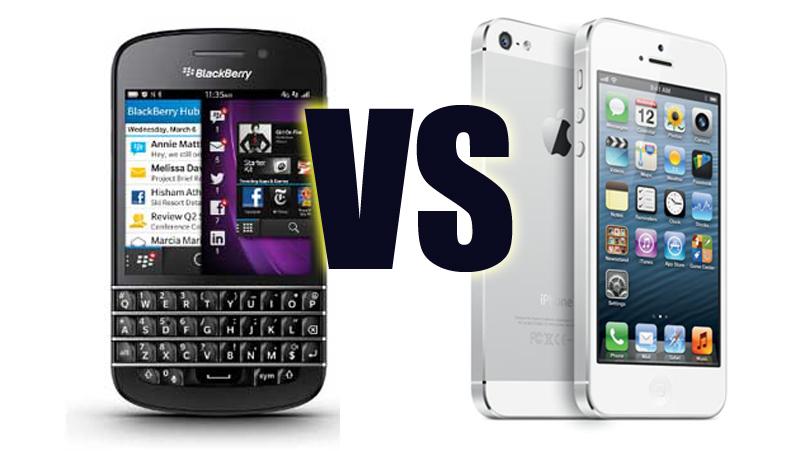
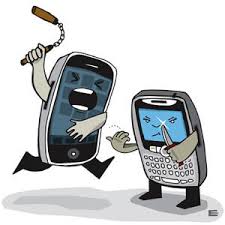
Another concept used by Blackberry is comparative advertising. Comparative advertising is an advertising tactic which directly declares the brand as being superior than its competitor (Muk, Chung & Chang 2017). Blackberry launched a TV commercial which compared it to Apple. According to Grewal et al, comparative advertising model consist of three hierarchical effects intended to make an influence on consumers (Muk, Chung & Chang 2017). The three effects are of cognition, affection, and conation. The cognitive function raises awareness by stating information or facts (Muk, Chung & Chang 2017). Next, awareness is first generated which leads to affective responses being developed. The attitudes developed are based on the information that is processed at the cognition stage. The conative function triggers desire causes consumers to purchase the brand (Muk, Chung & Chang 2017). Blackberry was looking to achieve all 3 hierarchical effects. In the commercial, it starts out by a blackberry fruit penetrating through an apple much like bullet going through a human body indicating that its superiority to apple. The next scene follows with the saying “the world’s first touch-screen Blackberry”, which is then followed by “nothing can touch it”. This shows that they are providing information to potential consumers to raise awareness about their new product offering. The following scene can be interpreted as having a better touch-screen than Apple. If the commercial is interpreted and perceived as Blackberry wanted, purchase intentions of Blackberry would have been high.
Product lifecycle theory states that every product has a lifecycle with four stages; introduction, growth, maturity and decline stage. Blackberry has gone through every stage from when it was first founded. At the introduction stage, products sold are market-oriented and innovative with little rivals (Chen 2017). During the birth of Blackberry, it filled a gap in the market. Before Blackberry came about, no product offerings permitted users to send emails through their cellular device (Tony 2012). At the growth stage, the product is slowly consumed by consumers and the growth rate and sales are increasing (Chen 2017). When they implemented a phone application to the device, Blackberry begun to grow. This innovative product could make calls, send messages and emails, which lead to it becoming a favourite for professionals (Tony 2012). Blackberry focused on these strengths to continue the growth of the product. At the maturity stage, the product is still exposed to the market as sales increase, but entry of new competition causes the beginning of the decreasing growth rate (Chen 2017). In 2007, iPhone was first introduced, changing the dimension of the mobile market. The innovative iPhone quickly became the more popular choice (Tony 2012). At the decline stage, the emergence of new competitive products caused a significant drop in merchandise sales and consumer demand has changed as the new products begin to replace the older products (Chen 2017). As the iPhone’s market share was growing, Blackberry failed to innovate to compete with the iPhone and products sales rapidly declined until it became an afterthought in the mobile phone industry. Furthermore, Blackberry announced a $965-million fiscal loss. The company had cut 40 per cent of its work force, as a last-ditch attempt to level costs with its revenue was plunging (Silcoff, Mcnish & Ladurantaye 2013).
TASK 2
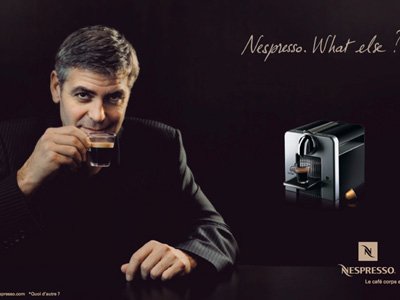
In a digital world today, viral marketing can be a huge reason for the success or downfall of a brand. Nespresso have utilised viral marketing well to grow in the market via the help of an opinion leader. An opinion leader is a person or a group of people who possess the ability to influence potential consumers’ decision making and adoption process (Jain & Katarya 2018). The opinion leader used by Nespresso is world famous actor and two-time Academy Award winner, George Clooney. George Clooney has featured in several advertisements for the Nestle-owned company. The Clooney featured videos have garnered more than 50 million views on YouTube which has increased Nespresso’s brand awareness among consumers (ThinkwithGoogle 2014). Since his involvement with Nespresso’s viral marketing, the company have had a growth rate of 35.5% in Great Britain and a 22% global growth (Teather 2010). Besides that, George Clooney has also assisted in the company gaining 7 million regular customers (Teather 2010). This proves that Nespresso have chosen the right opinion leader to help in their viral marketing strategy.
Heineken recently faced an issue on one of its advertisements. The beer company released a 30-second video which displayed a bartender sliding a bottle of beer across 3 black skinned people before reaching a light-skinned lady, followed by the tag line “Sometimes, lighter is better” (Morse 2018). Heineken was affected by this issue when Chance the Rapper released a tweet labelling the video as racist on his account which has more than 7 million followers. Majority of his followers agreed with his tweet and decided to boycott Heineken which would affect their product life cycle (Morse 2018). Based on a research by Digimind, it was found that the negative sentiment around the firm increased to 48% after the day of the rapper’s tweet (Zara 2018). In this case, Heineken is at the decline stage of the product life cycle. At this stage, sales begin to decrease and there is a change in consumer demand (Chen 2017). After the tweet, many consumers decided to boycott Heineken which would affect their sales negatively which causes them to lose revenue. However, Heineken did pull back the advertisement in hopes to win back the trust of consumers and to prevent them from declining entirely.
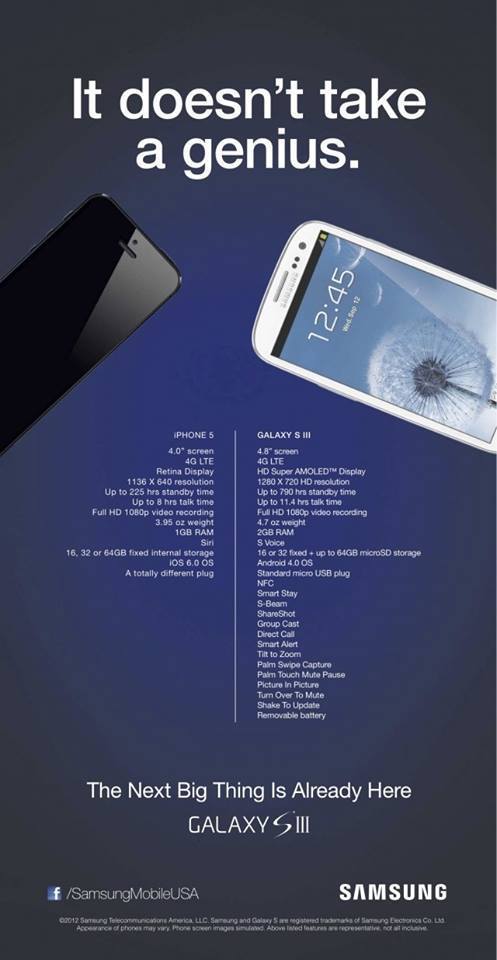
PEST analysis considers things from the perspective of politics, economic, social and technology. Samsung considers things from the technological perspective as it is their biggest strength as their products are all facets of technology (Frue 2019). The technological factor looks at the impact of technology on their product offerings and recent technology development (NetMBA 2010). Over the years, Samsung have been competing with Apple for market share in the automobile market. One strategy Samsung intends to gain top of mind awareness among consumers is by using comparative advertising. Comparative advertising is an advertising tactic which directly declares the brand as being superior than its competitor (Muk, Chung & Chang 2017). Samsung used direct comparative advertising as it directly compared the features of the Galaxy S3 against the iPhone 5 with the tag line “It doesn’t take a genius, the next big thing is already here”. The ad displayed all the technological features the Galaxy S3 has which was way more than the features the iPhone 5 possess. This advertisement was directly indicating that Samsung is far superior than the iPhone in terms of how their technology development contributes to Samsung’s product offering.
REFERENCE LIST
BlackBerry 2018, ‘Business’, BlackBerry, accessed 6/5/2019, https://blackberrymobile.com/my/business/
Chen, B 2017, ‘Study on establishment of product life cycle model of cultural creative product industrialization’, 2017 International Conference on Applied System Innovation (ICASI), accessed 5/5/201, http://ey9ff7jb6l.search.serialssolutions.com.ezproxy.uow.edu.au//?sid=Elsevier:Scopus&g nre=proceeding&issn=&volume=&issue=&spage=1259&epage=1262&pages=1259 1262&artnum=7988125&date=2017&title=Proceedings+of+the+2017+IEEE+International+C nference+on+Applied+System+Innovation%3a+Applied+System+Innovation+for+Modern+T chnology%2c+ICASI+2017&atitle=Study+on+establishment+of+product+life+cycle+model+o +cultural+creative+product+industrialization&aufirst=B.-C.&auinit=B. C.&auinit1=B&aulast=Chen&id=doi:10.1109%2fICASI.2017.7988125
Frue, K 2019, ‘PEST Analysis of Samsung’, PESTLE Analysis, accessed 9/5/2019, https://pestleanalysis.com/pest-analysis-of-samsung/
Jain, L & Katarya, R 2019, ‘Discover opinion leader in online social network using firefly algorithm’, Journal of Expert Systems with Applications, vol. 122, pp.1-15, accessed 7/5/2019, http://ey9ff7jb6l.search.serialssolutions.com.ezproxy.uow.edu.au//?sid=Elsevier:Scopus&g nre=article&issn=09574174&volume=122&issue=&spage=1&epage=15&pages=1 15&artnum=&date=2019&title=Expert+Systems+with+Applications&atitle=Discover+opinion +leader+in+online+social+network+using+firefly+algorithm&aufirst=L.&auinit=L.&auinit1=L aulast=Jain&id=doi:10.1016%2fj.eswa.2018.12.043
Mark, M 2012, ‘Nigeria’s Blackberry addiction offers hope for Research in Motion’, The Guardian, accessed 8/5/2019, https://www.theguardian.com/technology/2012/nov/14/blackberry nigeria-status-symbol
Morse, B 2018, ‘The 7 Most Embarrassing Branding Mistakes of 2018’, Inc, accessed 7/5/2019, https://www.inc.com/brit-morse/2018-biggest-marketing-branding-fails.html
Muk, A, Chung, C & Chang, E C 2017, ‘The effects of comparative advertising on young consumers’ perceptions: Cross-cultural comparison between the United States and Taiwan, Journal of Promotion Management, vol. 23(1), pp.100-122, accessed 8/5/2019, https://www tandfonline com.ezproxy.uow.edu.au/doi/full/10.1080/10496491.2016.1251527?scroll=top&needAcces =true
NetMBA 2010, ‘PEST Analysis’, NetMBA, accessed 9/5/2019, http://www.netmba.com/strategy/pest/
Silcoff, S, Mcnish, J & Ladurantaye, S 2013, ‘How BlackBerry blew it: The inside story’, The Globe and Mail, accessed 7/5/2019, https://www.theglobeandmail.com/report-on-business/the inside-story-of-why-blackberry-is-failing/article14563602/
Taormina, R J, & Gao, J H 2013, ‘Maslow and the motivation hierarchy: Measuring satisfaction of the needs’, The American journal of psychology, vol. 126(2), pp.155-177, accessed 8/5/2019, https://www-jstor org.ezproxy.uow.edu.au/stable/pdf/10.5406/amerjpsyc.126.2.0155.pdf?refreqid=excelsior 3A6c9552c20ffc76bff7e9181c874b96fb
Teather, D 2010, ‘Clooney’s Nespresso steams ahead with 35.5% sales growth in UK’, The Guardian, accessed 7/5/2019, https://www.theguardian.com/business/2010/apr/09/nespresso-uk sales-soar
Telegraph 2019, ‘The history of BlackBerry: in pictures’, The Telegraph, accessed 6/5/2019, https://www.telegraph.co.uk/technology/blackberry/11347347/The-history-of-BlackBerry in-pictures.html
ThinkWithGoogle 2014, ‘George Clooney Brings in Over 50M Views for Nespresso on YouTube!’, Think with Google, accessed 7/5/2019, https://www.thinkwithgoogle.com/intl/en-145/success stories/global-case-studies/george-clooney-brings-over-50m-views-nespresso-youtube/
Tony 2012, ‘5 Stages in the Evolution of BlackBerry Mobile’, Flash Video Tools, accessed 8/5/2019, https://www.flash-video-mx.com/blog/5-stages-in-the-evolution-of-blackberry-mobile/
Zara, C 2018, ‘Heineken still hasn’t recovered from Chance the Rapper calling its ad racist’, Fast Company, accessed 9/5/2019, https://www.fastcompany.com/40558140/heineken-still hasnt-recovered-from-chance-the-rapper-calling-its-ad-racist

 MARK217 C1