QUESTION 1
Packaging can be a very useful tool for marketers to attract the consumers. It draws attention for the consumers to purchase. The more attractive and more information on the package, the more likely for the purchase to be made. With this being said, it is proven that packaging design can influence consumer’s behaviour. Considering all the competition between various of products, packaging is important for each brand to lure customers in to purchase. When we visit a supermarket, why do we pick up an item based on the packaging, but without knowing the brand first? The answers are because of stimulus generalisation and stimulus discrimination.
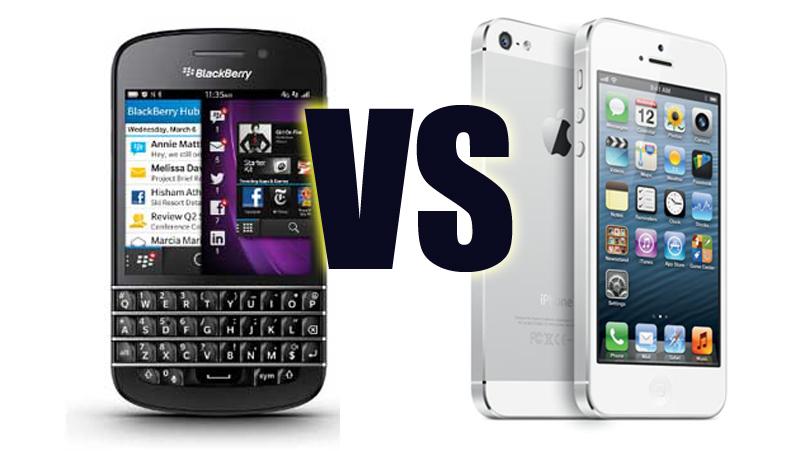
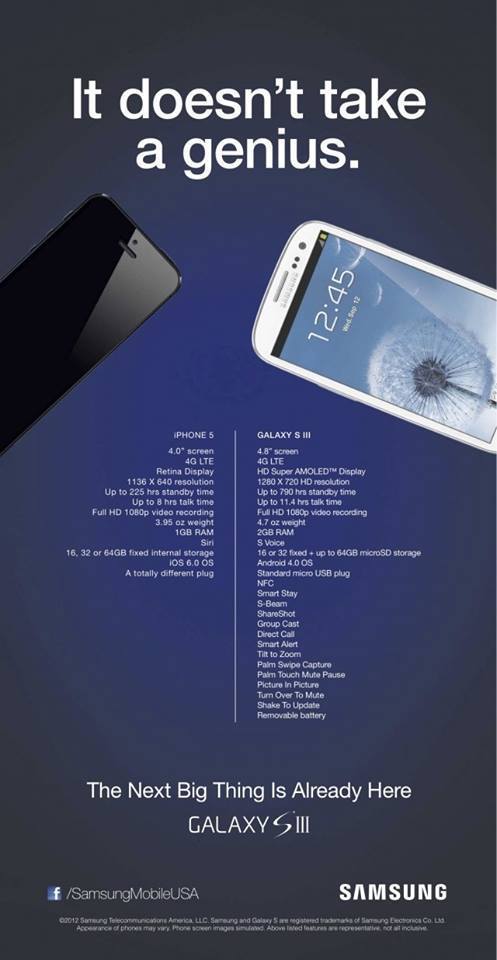
According to Cherry 2017, stimulus generalisation is the tendency for the conditioned stimulus to evoke similar responses after the response has been conditioned. In simpler terms, it means that marketers use this strategy to try to confuse consumers to get them to “accidentally” pick up their brand, which looks nearly identical, with only subtle differences with other competitors. It tricks the consumers mind through the same packaging of products. For instance, the similarity of design between Apple product, iPhone X and Huawei P20 which causes various perceptions in each consumers.
However, stimulus discrimination is the completely opposite with stimulus generalisation. Stimulus discrimination is when a brand uses packaging design to differentiate or stand out from its other competitors. The packaging design plays important role for the brand products to be known and noticed by the consumers. To make it simpler, it has to look more special than the rest of the products. Apart from that, the marketers usually use advertising to specially point out the brand’s differences and to make it stand out among other competitors (Quester et al. 2013).
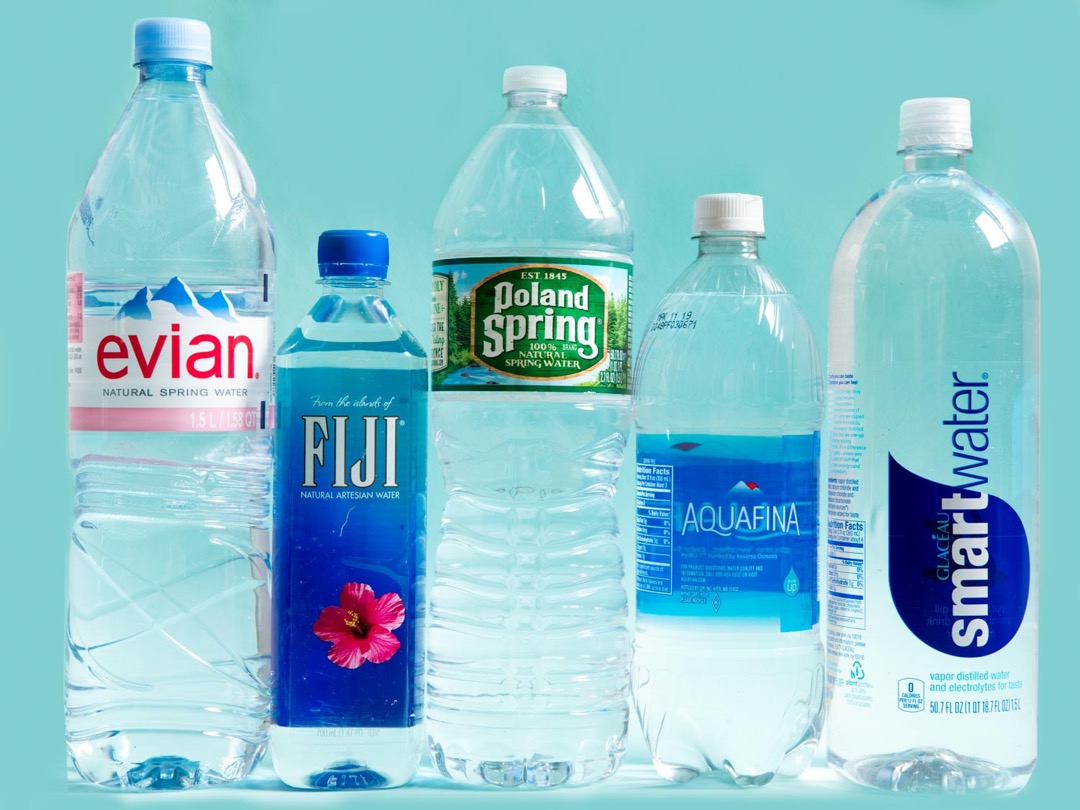
To justify the stimulus discrimination, take a look of the mineral water example above. All the products above have the same function, which is for drinking and to quench the people’s thirst. What makes them different between each other is how they stand out and compete with each other, which is by branding and the design of the packaging. Each brand and packaging design have different value to consumers which allows the consumer to identify the product through brand awareness and recognition.
If we were to enter a supermarket, be it a supermarket, megamall, or maybe a convenient store, the first thing that we would notice is of course the packaging of goods from afar. From there, we can already deduce what product is being located at the entrance of the market. However, every supermarket does not have only one specific brand of product for sale. Instead there are numerous of them in line and some are even queuing up to reach the supermarket shelf. The question is, how are we going to decide which brands of products are we selecting? With that being said, stimulus discrimination is then being introduce by marketers to capture the audiences’ attention. As stated above, stimulus discrimination is the selection of a particular stimulus which stands out from the other stimuli which are similar (Shiffman & Wisenblit 2015).
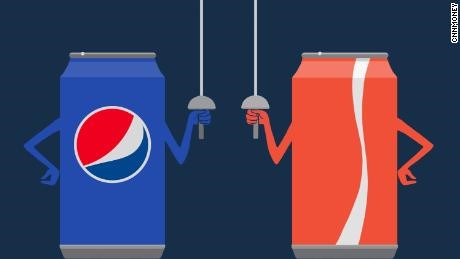
When we enter a supermarket at the drink section, we can see many brands of drinks in the shelf. For example, Coco-cola and Pepsi being the two famous carbonated drink brands on the shelf. If stimulus discrimination rule is being obeyed, we will see Coca-Cola has it’s bring red color in it’s can drink whereas Pepsi, having their dark blue can with its signature lookalike ball figure with white, red and blue color in it. As a consumer myself, from this form of discrimination, I can already see the main differentiation between these two brands.
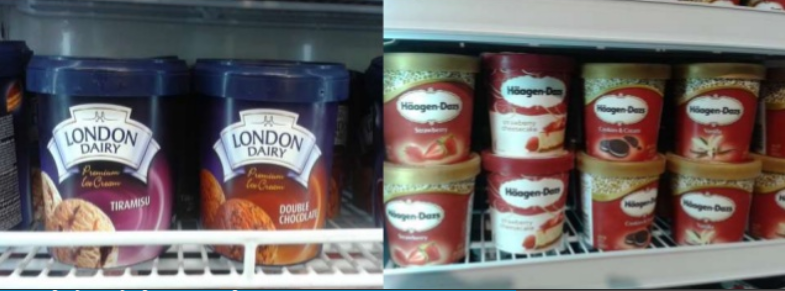
When comes to dessert section, still, we will see many different premium brands. Take Haagen-Dazs (HD) and London Dairy for instance, both brands are premium ice cream, expensive, and most importantly, they are newcomers in the Indian market (Teenasai 2013). If we take a closer look, the Haagen-Dazs packaging consist of a visual representation of the flavor of the ice cream which brings interest to the consumers. Notice, that the unique name, “Haagen-Dazs”, has already made people curious about their ice cream. On the other hand, if we look at London Dairy ice cream, their stimulus discrimination consists of a scoop of the ice-cream with its respective flavors unlike that of Haagen-Dazs. These two brands have also distinguished themselves based on color differentiation. For example, Haagen-Dazs carries the Red & Gold royal theme whereas the London Dairy uses it famous night blue to promote its product.
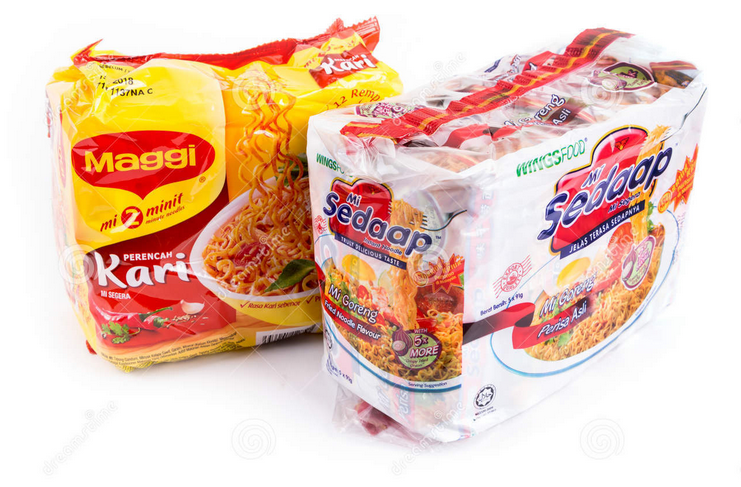
If we talk about the easiest and fastest way to cook and be able to eat in a short time, instant noodle comes to mind. In a supermarket, the two main brands that I consider are “Maggi Kari” and “Mi Sedaap”. In Nestle’s Maggie Kari, we can see that they used bright yellow packaging along with the visual representation of its “mee goreng” with spices. Over on the other side, Wingsfood’s Mi Sedaap kept it simple and creative in which they use white background and the standard signature Mi Sedaap logo. Not to forget Mi Sedaap also uses visual representation like Maggi Kari but what stands out is that, it shows a fork, scooping out the noodle which I believe it gives consumers the urge and feeling of trying that noodle. In terms of marketing strategy, Maggi decided to come out with “Maggi Big Kari” and “Magi Kari Extra Pedas” (Extra spicy) which is seen as a value added system in its product and therefore, I might consider purchasing them too.
In conclusion, stimulus discrimination can be found everywhere and anywhere in our daily lives without being able to avoid them. Therefore, as a smart consumer, we should not be fooled by their packaging, and instead follow what is best for us.
QUESTION 2

Gillette should begin to advertise their product to increase awareness about their brand new Gillette Series. They should also look to increase purchase intentions among potential consumers. Gillette is known for its shaving blades but they aren’t known for providing other products such as deodorant, antiperspirant and skin conditioner. Due to this, raising awareness about those new products is the what Gillette should be doing.
The concept of stimulus generalisation can be used to market these products. Stimulus generalisation is when a certain brand uses a similar design for the packaging for all or most of the products with the purpose of extending its goodwill to all its products. In this case, Gillette would be using a similar packaging for the deodorant and so on. As Gillette recently introduced those new products along with its already existing and successful shaving blades, Gillette would be implementing a product line extension as they are extending their current line of products. Their current line of products consist of the shaving blade and they’re looking to add a shaving cream, skin conditioner, antiperspirant and a deodorant.

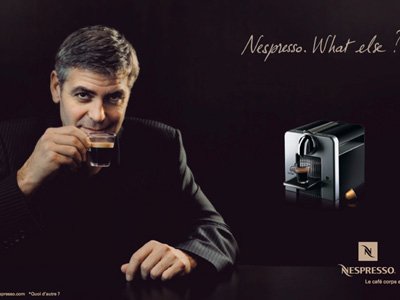
For the advertisement, Gillette could use the concept of opinion leader to help market these new products. An opinion leader is a person or a group of people who possess the ability to influence potential consumers’ decision making and adoption process (Jain & Katarya 2018). With the new extension of products, Gillette would need to get potential consumers to adopt these new products and try them. In the past, Gillette have used Thierry Henry, Roger Federer and Tiger Woods who at that time were one of the best athletes in their respective sports. Gillette can look to implement a similar technique again to help market their new products. In the video, Gillette can portray their newly selected opinion leader to get ready for a day out by using each product in their brand new Gillette Series. This will help increase awareness about the newer products rather than just the shaving blade and the opinion leaders will help increase purchase intentions.
Instrumental conditioning is when there is a trial and error process in which learning occurs which forms habits which results in receiving rewards when there is certain respond or behaviour. The one that is learned is also often the one which get rewarded the most for instrumental conditioning (Schiffmann L & Wisenblit J 2015 p 157)
Based on our opinion, instrumental conditioning can be applicable for this marketing situation because, according to psychologist B.F Skinner, learning usually happens in a situation when certain individuals are being rewarded for making a decision on the right choice. As a result this should be applicable as Gillette is such a remarkable brand in the market therefore loyal customers who buy the newly introduced product may be rewarded with store loyalty and hence might increase the chance of repeat purchase.
Customers might also go through a trial and error process where some brands may result in a more favourable outcome which rewards its customers (Schiffmann L & Wisenblit J 2015, p 157 ). If the customer would to enjoy the product, this has a high chance giving a lesson to the individual to repeat the specific behaviour. To relate to Gillette’s newly introduced toiletries, if customers would to buy more of Gillette’s new products, customers might receive a voucher for when the next time they would buy another Gillette product, it would be 10% off. This will cause customers to be more satisfied with their product as they are being rewarded when purchasing a Gillette product and will encourage repeat purchase in customers. To further add on, Gillette could organise events in which they offer free samples to customers. This would enable the consumers to try the products out and determine if they like it or not. If they do, they are likely to make a purchase.
WRITTEN BY:
Jeffrey Lim Yang Jinn – 5982157
Tracy Batu @ Batok – 5949816
Darren Ong Kenn Chong – 5990300
Lee Jin Yang – 5949610
Joel Isaac Daniel – 5983101
REFERENCE LIST
Cherry, K., 2017, “What Is Stimulus Discrimination?”, accessed on 23rd May 2019, https://www.verywell.com/what-is-discrimination-2795101
Jain, L & Katarya, R 2019, ‘Discover opinion leader in online social network using firefly algorithm’, Journal of Expert Systems with Applications, vol. 122, pp.1-15, accessed 7/5/2019, http://ey9ff7jb6l.search.serialssolutions.com.ezproxy.uow.edu.au//?sid=Elsevier:Scopus&g nre=article&issn=09574174&volume=122&issue=&spage=1&epage=15&pages=1 15&artnum=&date=2019&title=Expert+Systems+with+Applications&atitle=Discover+opinion +leader+in+online+social+network+using+firefly+algorithm&aufirst=L.&auinit=L.&auinit1=L aulast=Jain&id=doi:10.1016%2fj.eswa.2018.12.043
Schiffman and Wisenblit, 2015, Consumer Behaviour, 11th Global Edition, Pearson Education International
Teenasai 2013, ‘Consumer Behaviour-Stimulus Generalisation VS. Stimulus Discrimination’, SlideShare, 16 October, viewed 20 May 2019, <https://www.slideshare.net/teenasai/consumer-behaviour-stimulus-generalisation-vs stimulus-discrimination>.
Quester, P.G., Pettigrew, S., Kopanidis, F., Hill, S.R. & Hawkins, D.I. 2013, Consumer behaviour: implications for marketing strategy, McGraw-Hill Education, North Ryde, N.S.W.


 MARK217 C1